.livello elementare
.
ARGOMENTO: ARCHEOLOGIA DELLE ACQUE
PERIODO: VI MILLENNIO a.C.
AREA: NORD ITALIA
parole chiave: Lago di Varese
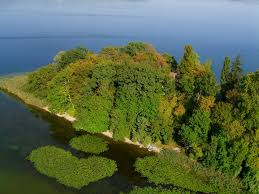
Isolino Virginia is a small island at the western shore of Lago di Varese in Northern Italy. Since the 19th century, It has been famous for its rich archaeological heritage.

Fig 1: Aerial Photograph of Isolino Virginia with excavation trenches and underwater archaeological evidence. Aerial photograph: Courtesy of Comune di Biandronno).
Recent archaeological investigations, which have been directed by Dr. Daria Banchieri (Museo Civico Archeologico di Villa Mirabello, Comune di Varese), have yielded archaeological evidence that the island has been occupied from the end of the 6th millennium on. A stratigraphy of Early Neolithic, Middle Neolithic, Late Neolithic and Bronze Age layers has been investigated in the center of the island. The oldest culture layers are preserved below water level and contain waterlogged archaeological evidence. Isolino Virginia is therefore one of the most important and most early sites within the circum-alpine pile dwelling culture.

Fig 2: Agostino Caló (diver at work) with volunteers of the auxiliary coastal guard staff (courtesy D. Banchieri)
It has become an UNESCO World Heritage Site in 2011. Although early scholars noticed piles at the shore and in the adjacent shallow water zones, archaeological activity of the last 140 years has focused on the island itself. A multibeam sonar investigation, carried out in 2009, marked the start of a systematic approach to investigate the shallow water zones as well. This hydrographic campaign resulted in first bathymetric data of the surroundings of the island and yielded interesting archaeological evidence. Due to the lack of trained archaeological divers, actual underwater archaeological investigations, however, could not be carried out so far. The UNESCO World Heritage nomination process has now started to generate a circumalpine, internationally organized network of archaeological research institutions, cultural heritage management administrations, museums, and training facilities.

Fig 3. : Prospection with Borer and handling pile samples by archaeologists and volunteers. Courtesy D. Banchieri
In 2012, Museo Civico Archeologico di Villa Mirabello started cooperation with the Landesamt für Denkmalpflege, Hemmenhofen/Lake Constance, Germany. The Hemmenhofen administration has close relations to the training centre Teraqua, which trains archaeologists to become Archaeological Divers/European Scientific Divers. This cooperation has laid promising fundaments for a future underwater archaeological approach. A first “one week” diving campaign has been carried out in September 2012, surveying the surroundings of the island, detecting pile fields, documenting lake shore stratigraphy, and sampling piles two meters below water level in a surface analysis area.

Fig 4: Prospection with Borer and handling pile samples by archaeologists and volunteers. Courtesy D. Banchieri
The diving team was led by Agostino Caló, one of the pioneers of Northern Italian fresh water archaeology. The underwater archaeological team consisted of Lapo Baglioni/University of Urbino, and Carlo Tessaro/University of Siena. The team was supported by Auxiliary Coast Guard staff members. Martin Mainberger/Teraqua supervised all underwater archaeological work and trained the diving team and staff members on state-of-the-art standards of underwater archaeological documenting and sampling.
The results of this first campaign are promising. Borings proved that exceptionally well preserved, abundant culture layers are lining the island´s shore. Extensive ile fields are proved to the East and North of the island. Stone structures confirm multibeam sonar evidence and raise new questions on the origin of the island. The first steps to a systematic monitoring programme have been taken.
It is planned to continue underwater works in the next years.
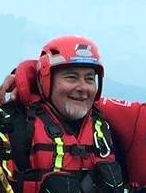 dr. Agostino Calò
Auxiliary Coast Guard

Alcune delle foto presenti in questo blog possono essere state prese dal web, pur rispettando la netiquette, citandone ove possibile gli autori e/o le fonti. Se qualcuno desiderasse specificarne l’autore o rimuoverle, può scrivere a infoocean4future@gmail.com e provvederemo immediatamente alla correzione dell’articolo
PAGINA PRINCIPALE

- autore
- ultimi articoli

è composta da oltre 60 collaboratori che lavorano in smart working, selezionati tra esperti di settore di diverse discipline. Hanno il compito di selezionare argomenti di particolare interesse, redigendo articoli basati su studi recenti. I contenuti degli stessi restano di responsabilità degli autori che sono ovviamente sempre citati. Eventuali quesiti possono essere inviati alla Redazione (infoocean4future@gmail.com) che, quando possibile, provvederà ad inoltrarli agli Autori.