.
livello elementare
.
ARGOMENTO: GEOLOGIA
PERIODO: XX SECOLO
AREA: OCEANO PACIFICO
parole chiave: oceanografia, minerali, sfruttamento consapevole
Mining machinery are still not available
Manganese nodule mining at an industrial scale is presently not possible because there are no market-ready mining machines. Although Japan and South Korea have built prototypes in recent years and tested them in the sea, these still need improvement. Three years ago the German Federal Institute for Geosciences and Natural Resources (Bundesanstalt für Geowissenschaften und Rohstoffe – BGR) invited tenders for a design study for suitable deep-sea machines that Germany wants to deploy in its own licence area in the CCZ. The participating companies included one that already makes machines for diamond mining in the Atlantic off Namibia. The equipment for diamond production, however, is deployed in only 150 metres of water near the coast. It still has to be adapted for water depths in the CCZ and working conditions on the high seas. After all, the machines for manganese nodule mining have to withstand the high pressures at water depths of 6000 metres.
Furthermore, they must be able to work dependably over long time periods because repairs on deep-sea equipment are extremely costly, starting with the raising of up to 250-tonne machines to the surface.

In the future, manganese nodules will be picked up from the sea floor by harvesting machines and pumped to the ship through solid pipes. But as yet no such machines have been built. Conceptual studies envisage an apparatus furnished with a special body that prevents stirring up large amounts of sediment.Manganese nodules « World Ocean Review
It is presently estimated that in the German licence area of the Clarion-Clipperton Zone alone, around 2.2 million tonnes of manganese nodules would have to be extracted in order to make the mining economically feasible. This requires not only the mining machinery, but also the technology for subsequent working stages.The extraction begins with the mining machines, which plough into the sea floor to a depth of 5 centimetres and cull the nodules out of the sediment. Most of the sediments should be separated out on site and left behind on the sea floor. The remaining nodule-sediment mixture is then pumped from the sea floor through rigid hoses to production ships at the water surface. On the ships the manganese nodules are separated from the sediment and cleaned. Finally they are loaded onto freighters that transport them to land, where they are processed and the metals separated out. This entire process chain still has to be developed. Furthermore, the metallurgical processes required to retrieve the various metals from the manganese nodules are not yet fully fledged.
Destruction of deep-sea habitats? Scientists agree that mining manganese nodules would represent a dire encroachment on the marine habitat
The following detrimental impacts are assumed:
While ploughing through the sea floor the harvesting machines stir up sediment. Ocean currents can move this sediment cloud through the area. When the sediments finally settle down to the sea floor again, sensitive organisms, particularly the sessile, immobile ones are covered and die. Directly in the ploughed area all organisms are killed that cannot escape the plough quickly enough, including snails, sea cucumbers and worms. And even if they are not hurt by the plough, they can be vacuumed up with the nodules and die during the cleaning process on the ship. The mining, pumping and cleaning of the manganese nodules creates noise and vibrations, which disturb marine mammals such as dolphins, and could force them to flee from their natural area. The sediment-laden water produced by the cleaning of manganese nodules is released into the sea from the ships. A sediment cloud is also created here. Present concepts envision a near-bottom discharge in order to minimize the spread of the cloud. Releasing it near the bottom also avoids clouding of the near-surface light-penetrating water layers. Biologists are concerned that clouding of the near-surface waters could disturb the growth of algae and other planktonic organisms.
Life in the manganese nodule fields
It is certain that these problems cannot be completely eliminated. However, discussions are presently underway about how to reduce them as much as possible. In any case, the ISA requires environmentally sound manganese nodule production. And solutions actually appear to be possible. According to recent studies, the sediment cloud can be reduced by using a cowled rather than open harvesting machine. This would, in part, prevent stirring up of the sediment into the water column.Furthermore, the sediment cloud released by the ship could be reduced by pumping it through pipes back to the sea floor so that the particles settle relatively quickly. Engineers say, however, that this additional pipe system would make manganese production significantly more expensive.
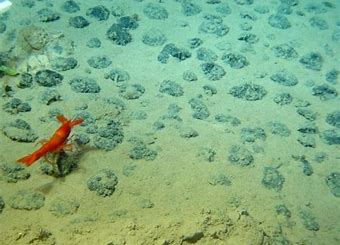
It is still not clear today how fast the habitats on the sea floor would rebound from this massive intervention Polymetallic Nodules | West Coast Placer
Several international projects have been carried out since the end of the 1980s to investigate the rate at which harvested areas of the sea floor would be recolonized. But these were quite small-scale interventions. For example, scientists in the German project Disturbance and Recolonization (DISCOL) ploughed up a sea-floor area of several square kilometres in the Pacific with experimental equipment and revisited the site over several years afterward. The results indicated that a period of 7 years were required before the ploughed area had adjusted back to the same density of bottom life as before. Yet some species had disappeared permanently, particularly those that were reliant on a hard substrate.
This means that after 7 years the disturbed area was significantly species-depleted. In 2015, the German Federal Research Ministry will provide money for an expedition that will visit this area once again. Then, for the first time, the long-term effects will be observed after a period of 25 years. The DISCOL researchers stress that the damage caused by mining a large area of manganese nodules would be much greater. After all, in the experiment a comparatively small area was harvested. The disturbed area was resettled rather quickly from the undamaged surrounding areas. But if areas with many more square kilometres of sea floor are harvested, recolonization of the harvested areas would take many years longer. The ISA therefore envisions that the licence areas would not be harvested all at once, but in smaller steps. Alongside harvested sites, untouched areas should be preserved. From these, the harvested areas can be recolonized. Marine biologists are trying to determine how the patterns of exploited and non-exploited areas should look in detail. It would thus be conceivable to limit the intensity of harvesting manganese nodule areas from the outset, proceeding in individual stages like the DISCOL project, alternating between harvested and unharvested strips. Such approach would be completely possible today thanks to precise GPS navigation.
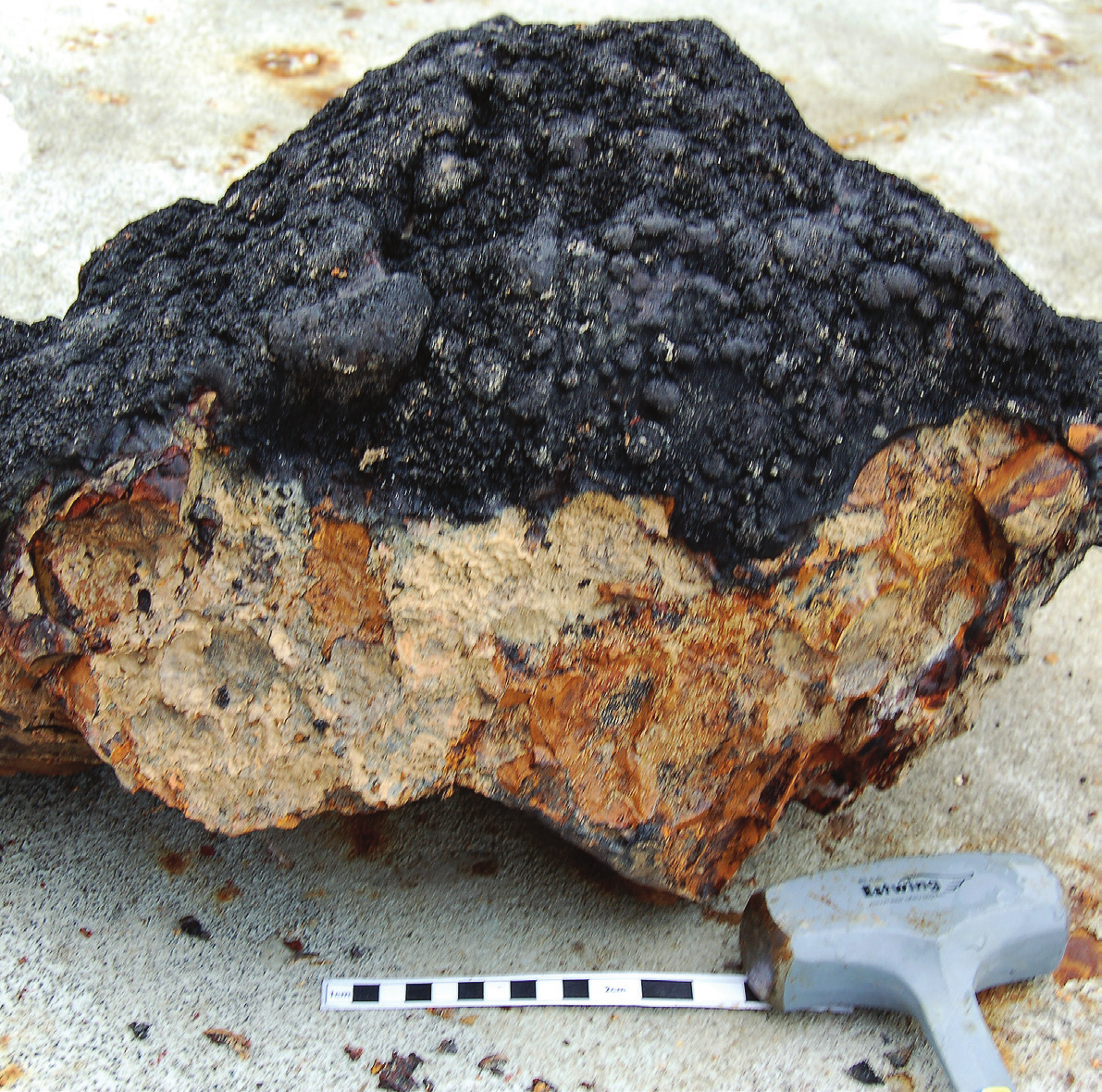
in the preview fragment of metallic crust https://www.westcoastplacer.com/tag/polymetallic-nodules/
to read the original article follow this link
Alcune delle immagini possono essere state prese dal web, citandone ove possibile gli autori e/o le fonti. Se qualcuno desiderasse specificarne l’autore e la fonte o rimuoverle, può scrivere a infoocean4future@gmail.com e provvederemo immediatamente alla correzione dell’articolo
PAGINA PRINCIPALE
.
PARTE I PARTE II
.

- autore
- ultimi articoli

è composta da oltre 60 collaboratori che lavorano in smart working, selezionati tra esperti di settore di diverse discipline. Hanno il compito di selezionare argomenti di particolare interesse, redigendo articoli basati su studi recenti. I contenuti degli stessi restano di responsabilità degli autori che sono ovviamente sempre citati. Eventuali quesiti possono essere inviati alla Redazione (infoocean4future@gmail.com) che, quando possibile, provvederà ad inoltrarli agli Autori.