
.
livello elementare.
ARGOMENTO: EMERGENZE
PERIODO: XXI SECOLO
AREA: NEWS
parole chiave: plastiche negli oceani, clean up the ocean
The longest floating structure in world history is about to hit the ocean to fix a very big problem by Laura Willard
In 2016, “the longest floating structure in world history” will be placed in the ocean. Don’t worry — it’s not another super yacht or party barge or some other contraption that will further pollute the ocean. Nope, this is a good thing. It’s called The Ocean Cleanup, and it’s a 1.2-mile-long system designed to collect and remove plastic from the ocean. For two years, it will hang out in the ocean hopefully to begin undoing what we’ve done.
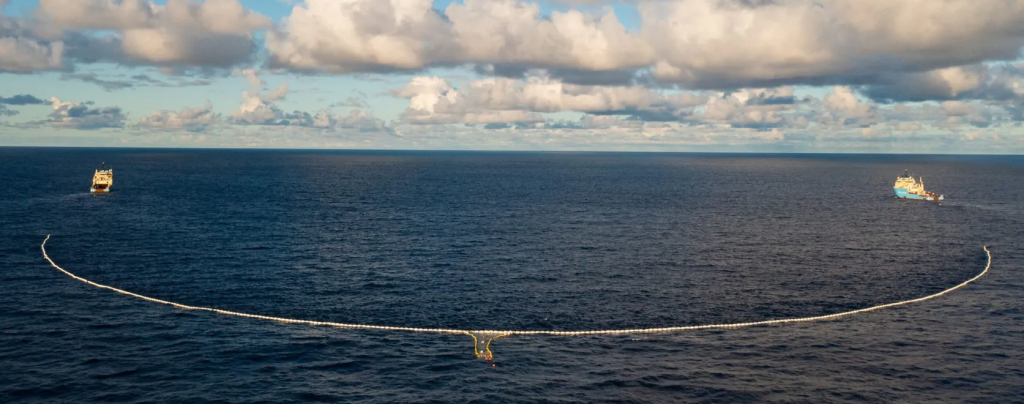
It’s basically a stationary array of barriers that uses the ocean’s natural currents to collect the plastic at a central location. When I first wrote about The Ocean Cleanup a year ago, I thought it was something that moved through the ocean, collecting trash as it went. But that’s not how it works at all. The Ocean Cleanup stays right where it’s launched.
Here’s how it works:
 “Why move through the oceans, if the oceans can move through you? Instead of going after the plastic using boats and nets, The Ocean Cleanup will use long floating barriers, using the natural movement of the ocean currents to passively concentrate the plastic itself.”
 “Virtually all of the current flows underneath these booms, taking away all (neutrally buoyant) sea life, preventing by-catch, while the lighter-than-water plastic collects in front of the floating barrier.”
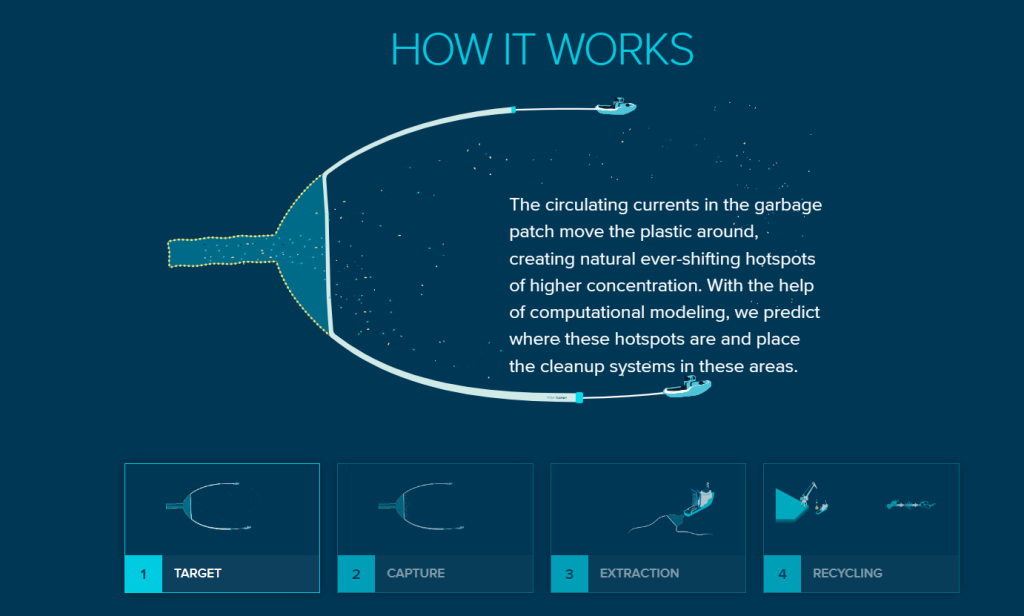
“The scalable array of floating barriers, attached to the seabed, is designed for large-magnitude deployment, covering millions of square kilometers without moving a centimeter.” Oceans • The Ocean Cleanup
The plan is to deploy The Ocean Cleanup near Tsushima, an island between Japan and South Korea, and let it do its thing for two years. Then the next step is to use all the plastic junk it collects as an alternate energy source. Talk about killing two birds with one stone. (although, this is quite the opposite of killing birds, so … bad metaphor).
Unfortunately, the ocean is super polluted. A lot of that pollution is plastic trash — 8 million tons of plastic end up in the ocean every single year. Right now, about 5.25 trillion pieces of plastic are floating around the ocean.

Top 15 reasons to stop using plastics – Bits Of Days author unknown
 And pollution, as we know, causes many environmental, economic, and health problems. For example, plastic kills over 1 million seabirds and 100,000 marine mammals every year. (That’s awful.) The animals it doesn’t kill are often left deformed, as was the case with Peanut the turtle, whose shell was warped after she got stuck in a six-pack plastic ring. The same thing happened to this poor guy too. Plastic pollution is expensive! Plastic in the oceans costs companies across the world over $13 billion a year and the U.S. government hundreds of millions in coastal cleanup efforts.
Wouldn’t it be great if we could spend that $13 billion elsewhere? Removing plastic trash from the ocean has been a huge struggle. But that’s about to change. So far, attempts to clear plastic waste from the ocean have involved ships and nets and just haven’t work. According to The Ocean Cleanup, solutions that move through the ocean to remove trash tend to be ineffective and also cause more damage: “Using vessels and nets to collect the plastic from one garbage patch would take about 79,000 years and tens of billions of dollars. Besides, such an operation would cause significant harm to sea life and generate huge amounts of CO2 and other emissions.”
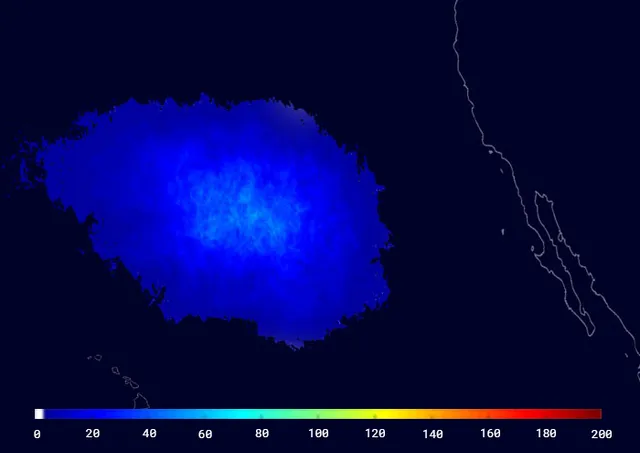
That’s what makes The Ocean Cleanup so cool. All studies show it’s going to work, it’s cost effective, and it doesn’t kill sea life. In fact, they are estimating that The Ocean Cleanup could remove half the plastic from the Great Pacific Garbage Patch in just 10 years, costing 33 times less money and happening 7,900 times faster than the old vessel and net method. This first deployment near Tsushima will give them an opportunity to test out exactly how much trash can be removed, and how quickly, in reality. Oh, and the guy who created this? He was a teenager when he got started on it.
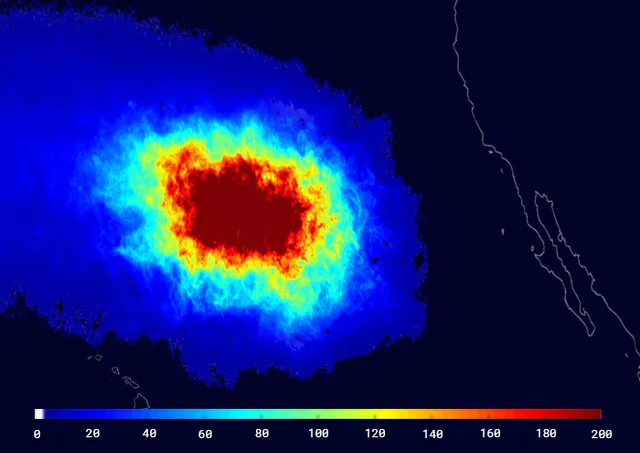
 Great Pacific Garbage Patch in 2030 with and without cleanup [scale: kg/km2]
Boyan Slat is the genius behind The Ocean Cleanup. He’s 20 now, so he’s getting pretty old. He was on a diving trip in Greece in 2011 — you know, when he was around 16 — and was astounded by the amount of plastic he came across, wondering why nobody had cleaned it up. Instead of waiting for someone to fix it, Slat came up with an idea himself, which he presented in 2012. In 2013, he began leading an international team of 100 engineers and scientists, and in 2014, they raised $2.2 million in crowdfunding. And here we are today!
Laura Willard
2016, originally at Oceans • The Ocean Cleanup and https://www.upworthy.com/
.
ABOUT THE OCEAN CLEANUP
The Ocean Cleanup is an international nonprofit project that develops and scales technologies to rid the world’s oceans of plastic. They aim to achieve this goal by taking a two-pronged approach: stemming the inflow via rivers and cleaning up what has already accumulated in the ocean. For the latter, The Ocean Cleanup develops large-scale systems to efficiently concentrate the plastic for periodic removal. This plastic is tracked and traced through DNV’s chain of custody model to certify claims of origin when recycling it into new products. To close the tap in rivers, The Ocean Cleanup has developed a portfolio of Interceptor™ Solutions to halt and extract riverine plastic before it reaches the ocean. Founded in 2013 by Boyan Slat, The Ocean Cleanup now employs a broadly multi-disciplined team of approximately 140. The foundation is based in Rotterdam, the Netherlands, and Kuala Lumpur, Malaysia.
CFF Communications, Amsterdam
Niels Broekhof
E: press@theoceancleanup.com T: +31 (0)6 30 37 49 30
U.S. Media Representative, San Francisco
Alan Dunton
E: adunton@shiftcomm.com T: +1 415-290-8219
.
.
Una sorpresa per te su Amazon Music unlimited Scopri i vantaggi di Amazon Prime
Alcune delle foto presenti in questo blog possono essere state prese dal web, citandone ove possibile gli autori e/o le fonti. Se qualcuno desiderasse specificarne l’autore o rimuoverle, può scrivere a infoocean4future@gmail.com e provvederemo immediatamente alla correzione dell’articolo
PAGINA PRINCIPALE

- autore
- ultimi articoli
è composta da oltre 60 collaboratori che lavorano in smart working, selezionati tra esperti di settore di diverse discipline. Hanno il compito di selezionare argomenti di particolare interesse, redigendo articoli basati su studi recenti. I contenuti degli stessi restano di responsabilità degli autori che sono ovviamente sempre citati. Eventuali quesiti possono essere inviati alla Redazione (infoocean4future@gmail.com) che, quando possibile, provvederà ad inoltrarli agli Autori.